“I believe the game will continue to thrive”: an in-depth interview with analyst Bleh from PGL Astana 2026
 Глеб Брехов
 Глеб Брехов
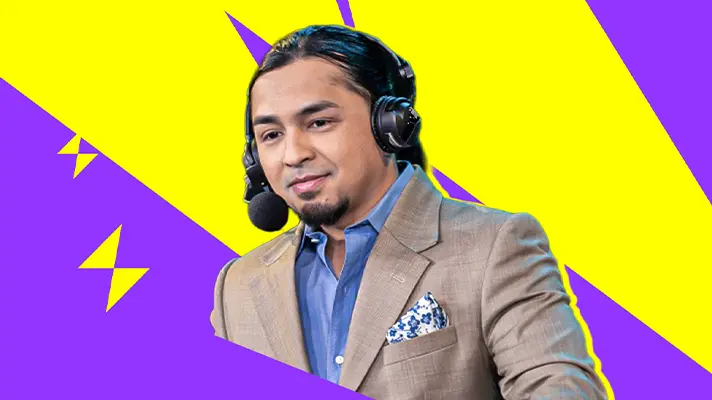
Analyst Suden “Bleh” Wachenbaum, in an exclusive interview with OFFSTAGE, assessed PGL Astana 2026 and compared it to last year’s tournament, talked about his own journey in esports, India’s chances of succeeding in this field, and predicted a bright future for Counter-Strike.
In my opinion, PGL Astana is gradually becoming a regular tournament. I think this is very good for Counter-Strike overall, since in the past, events focused on the European region. But recently, Brazil, China—specifically Shanghai and Hong Kong—and Singapore have emerged in this regard, and a Major will be held there soon. It’s great that we have organizers in Asia; this hasn’t happened before. All of this makes Counter-Strike competitions more global. Besides that, it’s nice to see that PGL is trying to hold events in places where teams haven’t been before.
Also, the fans in Kazakhstan who came to the event made it what it is. You can’t really feel it unless you visit and experience it firsthand. So this tournament has been one of the most pleasant surprises when it comes to events. Personally, I’m very happy to be here. I think PGL is doing an incredible job. But the most important thing is the fans here. They’re the ones who made this event what it is. It’s also great that the players, casters, and spectators can see that. A lot of young people came here. That’s why I’m sure that PGL Astana has been the most pleasant surprise for Counter-Strike in recent years.
Of course, last year’s tournament was simply incredible, but in 2026 there were more Tier 1 teams here. Many teams from the top 10 participated. So, I think the teams that didn’t participate last year saw the huge crowd of fans, the event’s global scope, and realized they had to come too. As a result, everyone was here except Team Vitality and Natus Vincere. That is, really almost everyone from the top 10. It turns out that the teams took notice of this tournament, and PGL, in turn, is trying to raise the event’s profile. For example, this time the group stage matches were played at Barys Arena, whereas that wasn’t the case last year. Clearly, we can see that for PGL, this is the biggest tournament on the calendar, just as IEM Cologne is for ESL, and as Hong Kong is now for BLAST (previously it was Copenhagen). In other words, this is PGL’s Cologne. In 2026, PGL made an effort to raise the organization’s standards.
As a talent from an English-speaking studio, I can only speak for myself, not for the others. Of course, the players are the main stars; they always have to be. They get much more attention, and as for the talents, we aren’t particularly well-known because, I suppose, many people in Kazakhstan watch Russian-language broadcasts. I’m not complaining; I can walk down the street without any issues. But it was really nice to meet a few people who recognized us. They were incredibly polite and kind fans. All in all, I can’t complain about anything.
Two events come to mind. The first was when I first attended IEM Rio, the Major in Rio de Janeiro. It was just wonderful, the craziest experience: incredibly energetic fans, so loud. Even despite the language barrier, it was as if everyone had thrown a party in the city—it was great. Something similar happened at the Perfect World Major in Shanghai. For example, you could see Chinese fans outside the hotels greeting the players as if they were rock stars. In terms of atmosphere, Kazakhstan falls somewhere between those two events.
But personally, I see a difference in how young the fan base is here. Compared to Brazil and Shanghai, where the fans were teenagers or young adults, here we see schoolchildren—kids who are 12 or 10 years old—running around and begging for autographs. And it’s cool that so many young people are coming out to show interest in a game that’s already 26 years old.
I’ve been playing Counter-Strike for 25 years or more now. I’ve also been following the esports scene since 2003. But I never thought about building a career in esports; I just loved the game—Counter-Strike specifically—and followed it and watched it. When CS:GO came out, I had a regular job, and in the evenings I’d hang out with friends or play Counter-Strike.
One day, my friend and I were watching a match, and he suggested I try my hand at commentary. So I decided to give it a shot. This was right when ESEA opened its Asian division, and there were no commentators there at all. I signed up for a Twitch account, started streaming, and began commentating on matches. I wasn’t very good at it, but I kept doing it anyway. Then things just took off; some small companies noticed me and signed me on for a series of events. That’s when I thought, “Well, I might as well give it a shot and see how it goes.” If it hadn’t worked out, I would have just gone back to my old job. But in the end, it all worked out, somehow.
In a way, we call it a “traveling circus” because we’re all very different people. But after all these years, I’d say I feel comfortable with everyone. As an analyst—though I’ve also worked as a commentator—I believe it’s very important to feel at ease with the other talent. I want to emphasize that I enjoy interacting with everyone, including those who are here right now.
If we’re talking about the ones I like a little more… Yeah, I can name a few. For example, Mauisnake—he’s the one I’ve worked with most often, and I really enjoy working with him. I can say the same about YNk; we’ve been to many majors and other events together. He’s a true professional. When you work with people like that, it raises your own game too. When I’m with them, I perform better. So yes, Mauisnake and YNk. And not too long ago, I also enjoyed working with Professeur from HLTV. He participates in various events, and we’ve been friends for a long time. When we’re paired up, it’s more like two friends talking about Counter-Strike. What more could you ask for?
I started out as a commentator, and for a long time I enjoyed working in that role. But as time went on, I began to prefer the analyst position. In my opinion, commentary requires certain skills. I have some of them, but I don’t think I’m perfect at it. On the other hand, for analysis, it’s important to be able to convey information and do so in an engaging way. When you’re a caster, the main thing you work with is the game itself. When you’re sitting at the analyst’s desk, the most important thing is being able to entertain people while talking about the game at the same time. And that’s exactly the part I enjoy. So I like talking about the game while entertaining people, joking around, and having a good time. That’s why it’s a really tough question—I like both. But for now, I’d give the edge to analysis.
Both have their pros. At smaller events, you have more freedom: you can relax more, act casually, and joke around. There’s a laid-back vibe at them. It’s nice to attend smaller events, not worry too much, relax, and have a good time when you’re constantly traveling.
Majors, on the other hand, add pressure. After all, it’s a major—everyone is watching. You have a responsibility: you’re obligated to create a good product, a perfect one. But I actually like the pressure; it’s interesting. It pushes you to aim for a higher level and do your best work. Even though I’ve been doing this for over 10 years, I still get nervous during a major or on the first day of the playoffs. I still get nervous, but I like it. It means I still love what I do. So yes, that’s the main difference. Both are on the calendar, but nothing comes even close to a Major.
It’s a fairly recent phenomenon, because for a long time, society wasn’t very interested in esports and gaming, including back when I was still playing. But I think over the last 6–7 years, this field has become less niche, as more and more people in the country have started using mobile phones. As a result, the popularity of mobile esports has grown, for example, in PUBG MOBILE and Free Fire. PUBG and Free Fire have attracted more and more users. Children started playing them because in such a poor country, few people can afford a computer—it’s a luxury.
So we haven’t achieved success in traditional esports, which isn’t the case with mobile games. A huge number of children play them. So right now in India, mobile esports is a very large market, and many are targeting it. So the field is no longer isolated; it’s now mainstream, since there are popular streamers and players with millions of subscribers, including on YouTube and all that. But I don’t think it’s as mainstream yet as, say, in China or Western countries. Nevertheless, things are gradually moving in that direction; it just takes time.
I was about 25 when I started doing this; I had a degree in engineering and was also working. So, if I may put it that way, I didn’t need anyone’s approval to try my hand at this field. And, to be honest, my mom was very supportive. Once, when I was playing, she said, “You spend so much time on this game, why don’t you work on it?” I laughed and said, “I’m not going to work at Valve.” At that moment, I wasn’t thinking about how to get into this field, but, funnily enough, literally two years later, I threw myself into it, and it became my main job. She still says, “I told you you should have given it a try.” And I reply, “Yeah, you were right.” So I could always count on her support. All my friends, including my close friends from college who I played Counter-Strike with, were also very supportive of me. To be honest, they’re even proud of me. They play CS and say: “We’re working regular jobs, and you’re traveling all over the world, talking about Counter-Strike—that’s cool.” In my opinion, it was all pretty straightforward. But I suppose if I were 15 and told my parents I was going to devote all my time to Counter-Strike, they probably wouldn’t be happy.
I don’t think we’ll do very well. To be honest, in most of the games featured, very few people play at a high level. I think India can only succeed in Free Fire, if that game is included, and in PUBG MOBILE. But, it’s worth noting that in India they play a different version of PUBG MOBILE called Battlegrounds Mobile, though it’s essentially the same thing. Maybe in other games they could surprise us and perform well, but unfortunately, no—overall, they won’t be able to pull it off.
Yes, it has changed a lot. First of all, the industry has started to mature. Yes, people used to invest money in it, and there was a lot of hype, but it seemed to me that there was a certain instability. Everything started to change when more tournament organizers emerged. During the COVID-19 pandemic, the market was effectively split between two major TOs—BLAST and ESL. Now we also have PGL, and thanks to the VRS system, there are more LAN-format events. So, right now is the best time the industry has ever had. Furthermore, while interest in other sports has come and gone, Counter-Strike is doing relatively well and remains stable. This stems from the community, from the people, rather than being something artificially created. It doesn’t work the way it does in other esports, where publishers simply pour a ton of money into it. The pro scene has a life of its own without direct support from Valve. That’s exactly what makes Counter-Strike special compared to the other 90% of esports.
It’s been 10 years now; it’s a pretty unusual job. I can’t really discuss it with my friends or family and expect them to understand. I travel a lot… Some would call it a stressful job, but I think it takes a lot out of you. The problem is also that, alongside all this, you have to try not to forget about your personal life and generally have a life outside of Counter-Strike. It was hard at first, but now I’ve managed to handle it more or less. When it comes to games, I don’t play any other multiplayer games besides Counter-Strike. CS takes up a lot of my time. Setting that aside, yes, I still love my job and gaming in general. That said, no other game evokes the same emotions as Counter-Strike. The great thing is that I don’t just work with it—I live and breathe it.
I’m older than karrigan now, so I can’t really achieve much. But if we’re talking about my Premier rank, it was around 28,000–29,000. I’m in the Red tier, though I’ve always wanted Gold—but there are too many cheaters there. On FACEIT, I’m at Level 10, but right now I’m just playing with friends. We’re putting together a five-player squad, and all of us are over 30. We play for fun; I’m around 2,400 ELO. The days when I was grinding hard are long gone. I just play to have fun.
I’m looking forward to what’s coming in the near future. In my opinion, the VRS system seemed confusing to many when it first came out, and it was complicated. But now everyone is starting to understand how it works. So things are moving in the right direction. And considering that Valve added Animgraph 2, the game feels better than ever. I hope that with the upcoming updates, we’ll see a great CS. CS wasn’t perfect when it first came out, but Valve has done a great job of fixing it gradually. Some people say that Counter-Strike will die within the next 10 or five years. But they’ve been saying that for 25 years now. I believe the game will continue to thrive. Maybe not CS3, of course, but who knows.
Глеб Брехов